Best Time to Spray Your Crops in NSW
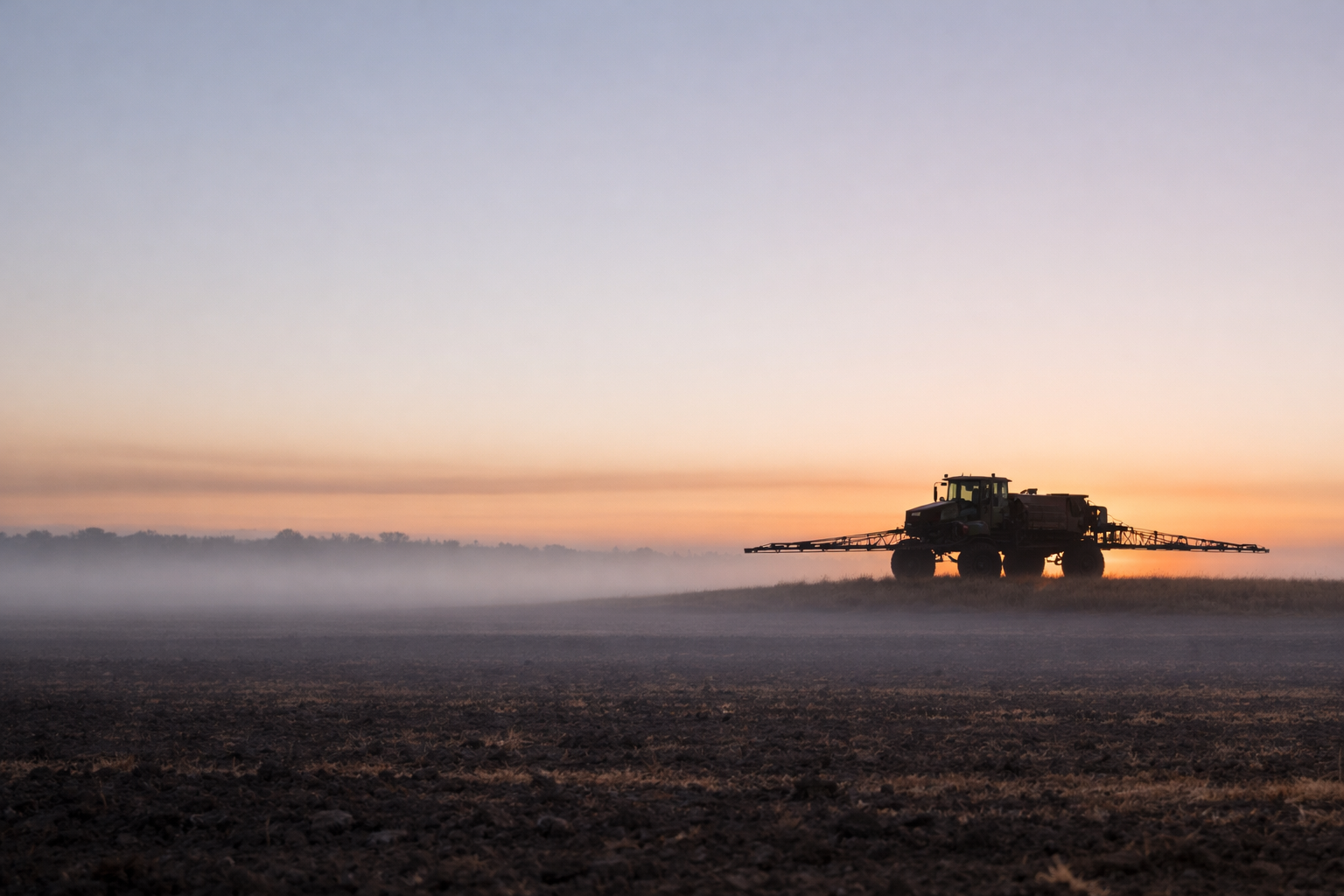
North West NSW farmland near Moree, wide black soil paddock at dawn
There's a narrow window between 'conditions are good' and 'you're drifting onto the neighbour's cotton.' In North West NSW, that window can be as short as two hours on a summer morning. Get the timing right and the spray job works. Get it wrong and you've wasted a tank of chemistry, potentially damaged a neighbour's crop, and created a weed problem that'll follow you into next season.
This article covers when to spray across the year for the main broadacre crops in the Gwydir region. For the full weather rules that govern safe spraying, our article on spray weather conditions in NSW goes deeper on Delta T, inversions, and wind.
Morning vs Afternoon Windows
Early morning is almost always the best window in summer around Moree. Wind speeds are typically in the 3 to 15 km/h range, Delta T sits within the ideal 2 to 8 bracket, and humidity is higher, which improves droplet survival and herbicide uptake. It's also generally before the northerlies pick up.
Afternoons on the Moree Plains in summer are a different story. Temperatures spike fast, Delta T blows out, and winds can build from the north without much warning. If you're not finished by late morning in peak summer, it's worth asking whether the afternoon pass is worth the risk to the crop and to the neighbour's cotton.
The catch with early mornings is temperature inversions. On clear, still nights the black soils cool quickly and trap a layer of cold air at ground level. That inversion can persist well past sunrise, and spraying into it is one of the most common causes of drift incidents in the Gwydir Valley. Below 3 km/h wind is a strong signal that an inversion is still present. Wait for it to clear before you start.
The WAND spray hazard system gives real-time inversion data for North West NSW and is free to use via smartphone. It's worth checking before you head out, particularly in summer and on clear autumn mornings.
Delta T and Spray Conditions
Delta T is the single most useful indicator of whether conditions are right to spray. It's the difference between dry bulb and wet bulb temperature, and it tells you how quickly spray droplets evaporate after leaving the nozzle.
According to GRDC's Weather Essentials for Pesticide Application, the accepted spray guideline is:
Delta T 2 to 8: ideal. Droplets survive long enough to reach the plant and absorb properly.
Delta T 8 to 10: caution. Go coarser on droplet size and increase water rates.
Delta T below 2: droplets hang in the air too long. High drift risk. Stop.
Delta T above 10: droplets evaporate before reaching the plant. You're wasting chemistry.
Around Moree in January, Delta T can climb past 10 by 9:30am on a hot, dry morning. That's your signal to shut down and wait, or plan the following day's start once the inversion has cleared and conditions are more stable. A Kestrel handheld meter or farm weather station gives you real-time readings at the paddock, which is always more reliable than a BOM station 50 km away.
💡 Always check conditions at the paddock, not the forecast. The difference between what the BOM reports and what's happening in your fallow on a still autumn morning can be significant.
Fallow Spray Timing
Fallow management on the black soils around Moree, Pallamallawa and Garah is year-round work. Weeds don't take a season off, and every plant that sets seed in a fallow is building the seedbank for next crop's weed problem. The target is small weeds at 2 to 3 leaf stage, which cost less product, absorb herbicide better, and haven't produced seed yet.
Waiting a week for better weather is sometimes unavoidable. That week has a cost. A well-timed contractor booking means you can move the moment conditions allow rather than chasing availability after the window has opened.
Optical spot spraying with Trimble WeedSeeker 2 technology is increasingly used for fallow work in the Gwydir region, particularly where weed density is patchy. It cuts chemical costs significantly and reduces selection pressure on weed populations. Our article on spot spraying technology covers how the system works and what the savings look like in practice.
Cotton Pre-Emergent Timing
Cotton pre-emergent herbicides around Moree need to go in before or at planting, ahead of the summer storm season. The timing is tight because you're working around planting windows and relying on rainfall or furrow irrigation to activate the chemistry and move it into the germination zone.
Miss the window and you're managing weeds in-crop instead of suppressing them before emergence. In-crop weed management in cotton is more difficult, more expensive, and carries more resistance risk. Getting the pre-emergent right is one of the most valuable timing decisions in the cotton program.
💡 2,4-D ester applications anywhere near cotton in summer carry serious liability. Cotton is extraordinarily sensitive to 2,4-D vapour. Stick to amine formulations in this region during the summer months and always check the APVMA label requirements.
Winter Cereal Timing
Wheat and barley around Moree are generally sown from April through to mid-July. In-crop herbicide applications have longer spray windows than summer crops because temperatures are cooler and Delta T stays manageable through more of the day. The main timing constraint is growth stage. Most in-crop herbicide labels require application before stem extension to avoid crop damage, and some have tighter windows than that.
Pre-emergent applications at planting need activating rainfall to work. On the black soils, timing pre-emergents to work with expected light rain rather than hoping for follow-up is the smarter approach. Heavy rain shortly after application can push product deeper into the soil profile than intended.
Chickpea Spray Windows
Chickpeas are sown from around May through to late July across the Gwydir region, depending on moisture. They're poor competitors with weeds at early growth stages and some herbicide options are restricted to specific crop windows on the label. The combination means timing is non-negotiable. Weeds competing with chickpeas at establishment can cut yield significantly, and options narrow fast as the crop develops.
Check the label. Spray early. The growth-stage window on some chickpea herbicides closes faster than operators expect.
Sorghum and Summer Crop Timing
Summer crop spraying in the Gwydir Valley is where timing is most critical and the stakes are highest. High temperatures, volatile chemistry, and cotton nearby make every application decision consequential. Pre-plant weed control before sorghum planting is generally preferable to in-crop applications when summer conditions are difficult.
Sorghum is typically planted from September through to December around Moree, with earlier plantings preferred to avoid flowering during peak summer heat. The spray program leading into sorghum planting, particularly fallow knockdown and pre-emergent timing, sets up the in-crop weed picture for the whole season.
For the full picture on how seasonal timing connects to yield outcomes and the cost of missing windows, our article on why spray timing matters works through the numbers in detail.
When to Book a Contractor
If you're running a tight spray window around a planting date or a pre-emergent timing, don't leave the contractor booking until the week before. In-season demand around Moree is real, and a well-run operation books up quickly when the window opens across the region at the same time.
Gwydir Crop Care runs flexible scheduling including early starts and late finishes, but availability is limited. Get the booking in early and lock in a window before you need it. A contractor on-call means you can move the minute conditions allow, rather than fitting spraying around other farm priorities.
Gwydir Crop Care is based in Moree and services farms across the Gwydir Valley and North West NSW within 100 km. Warren and the team are ChemCert-accredited, fully insured, and schedule around your season, whether that means early starts, late finishes, or getting on the phone when rain is forecast.
Call Warren: 0488 175 275 | warren@gwydircropcare.com.au | gwydircropcare.com.au