Frequently Asked Questions
Booking and Service Area
-
Gwydir Crop Care is based in Moree and services farms within 100 km. That covers the Moree Plains, Gwydir Valley, and surrounding districts, including Pallamallawa, Garah, Croppa Creek, Mungindi, Boggabilla, Gurley, Biniguy, and out towards Narrabri and Walgett. If you're not sure whether your property falls within our area, give Warren a call on 0488 175 275.Gwydir Crop Care is based in Moree and services farms within 100 km. That covers the Moree Plains, Gwydir Valley, and surrounding districts including Pallamallawa, Garah, Croppa Creek, Mungindi, Boggabilla, Gurley, Biniguy, and out towards Narrabri and Walgett. If you're not sure whether your property falls within our area, give Warren a call on 0488 175 275.
-
As far in advance as you can manage. In-season demand around Moree, particularly during fallow spray windows and the pre-emergent period ahead of winter planting, fills quickly when the whole district opens up at the same time. Booking a week or two out is ideal. That said, we do our best to accommodate urgent jobs when the window is open and the rig is available. Contact Warren directly if you need something at short notice.
-
We stop, record the conditions, and pick up the job as soon as conditions allow. Under NSW regulations, spraying must cease if weather conditions move outside the parameters on the product label. We don't push on when the window has closed. All our spray records document the conditions at every stop and start, which protects you as the landholder and us as the operator.
-
Yes. Spray windows don't always open at convenient times, and around Moree in summer, the best conditions are often first thing in the morning before Delta T climbs. We run early starts and late finishes and work weekends during busy periods. Flexible scheduling is part of how we operate.
-
That's exactly what we're set up for. Pre-emergent applications that need to go in at or before planting, fallow knockdowns ahead of seeding, in-crop applications with growth-stage deadlines on the label — we understand how these fit into the broader program. Book early and we'll schedule around your planting dates.
Licencing, Accreditation and Insurance
-
Yes. All Gwydir Crop Care operators hold current ChemCert accreditation in chemical application. ChemCert is renewed every five years and covers safe handling, application, record keeping, and label compliance. You can ask to see our certification — we're happy to provide it.
-
Yes. The NSW EPA requires all commercial spray operators to hold a current Ground Applicator Licence, separate from ChemCert. Ours is current and registered on the NSW EPA's public licence register. You can search it yourself at the EPA website — just search 'Ground Applicator Licence Register NSW'. Any commercial operator working on your property should be on that register. If they're not, they're operating unlicensed.
The EPA has been running active compliance checks across the Moree Plains, Walgett and Narrabri districts targeting unlicensed operators. It pays to check. Search the EPA licence register here.
-
Yes, Gwydir Crop Care carries full public liability insurance. Spray drift incidents involving sensitive crops like cotton can carry significant liability. You want to know that the contractor working on your property has cover in place before they start, not after something goes wrong. We're happy to provide proof of insurance on request.
-
Yes, for every application. Under the NSW Pesticides Regulation 2017, commercial spray records must be created within 48 hours of each application and kept for a minimum of three years. Our records include the product name and APVMA approval number, rate applied, water volume, wind speed and direction at the application site, temperature and relative humidity, Delta T, and the operator's name and licence number. We can provide a copy to the landholder on request — and under NSW regulations, we're required to provide one if you ask.
-
That's exactly what we're set up for. Pre-emergent applications that need to go in at or before planting, fallow knockdowns ahead of seeding, in-crop applications with growth-stage deadlines on the label — we understand how these fit into the broader program. Book early and we'll schedule around your planting dates.
Equipment and Services
-
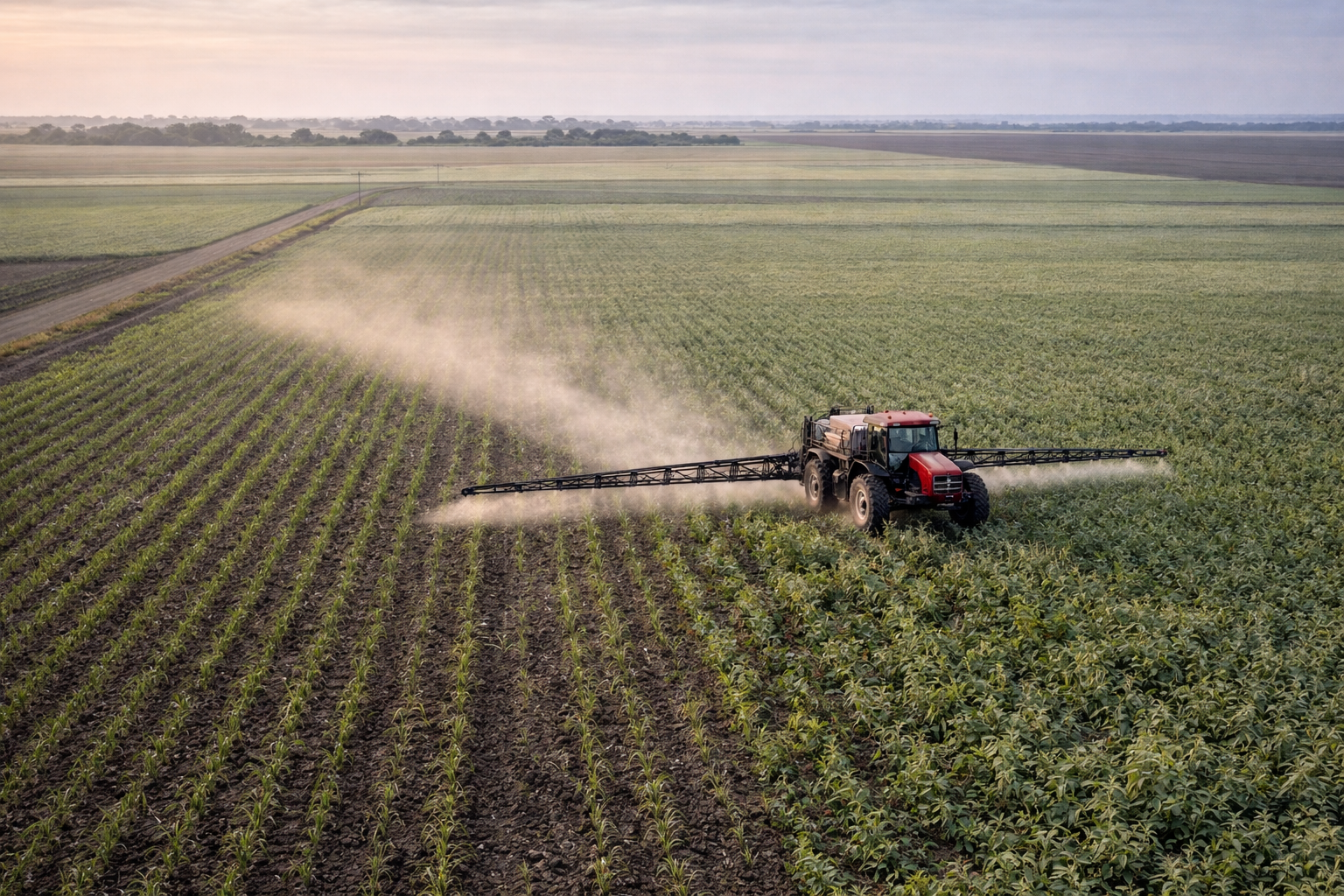
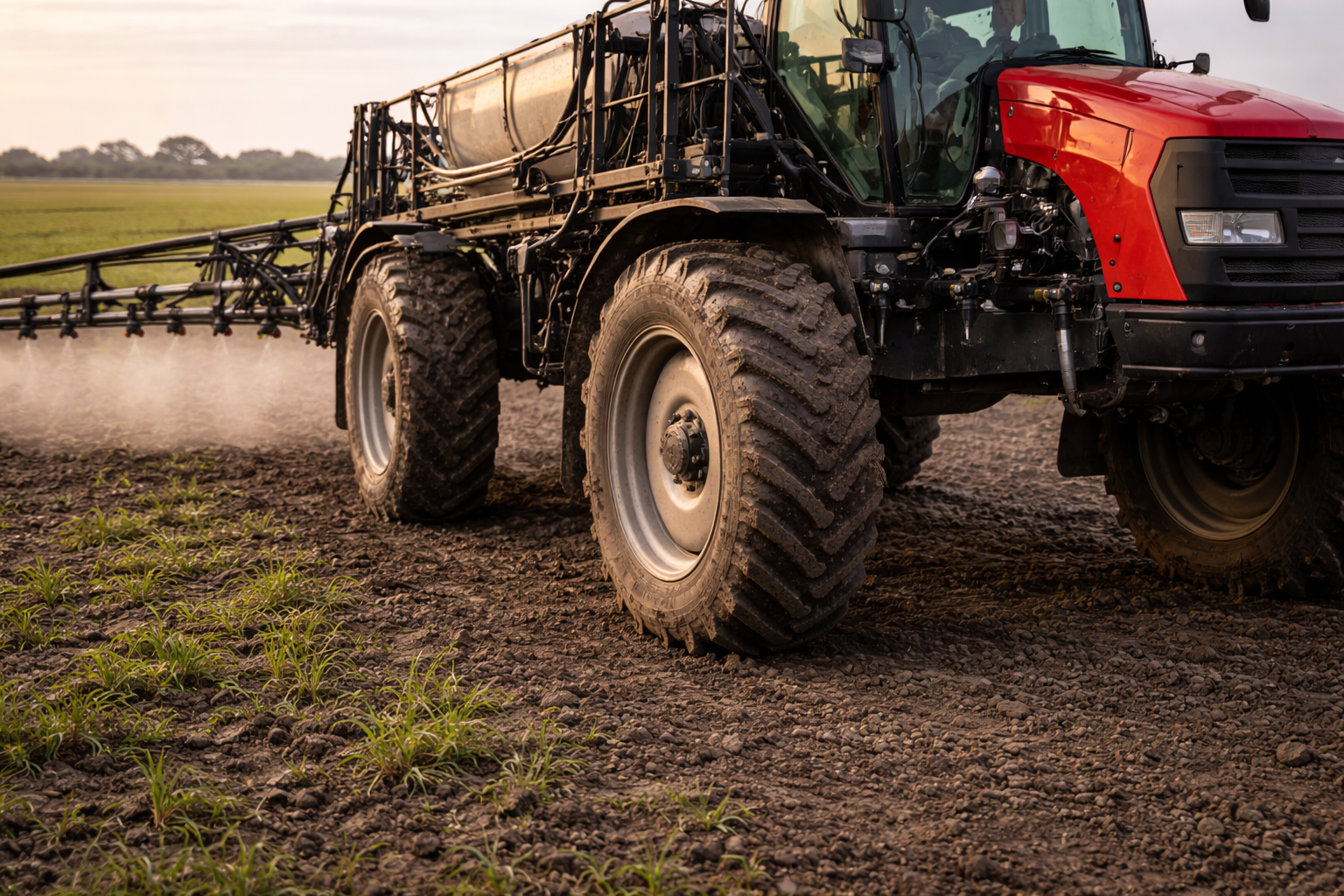
We run two Case Patriot 4430 self-propelled sprayers with Aim Command Flex. One is set up for broadacre and irrigation spraying, the other runs Trimble WeedSeeker 2 optical spot spraying technology for fallow and headland work. We also run RTV sprayer units for channel banks, fence lines, shed yards, and smaller specialty jobs.
Having two rigs means we can cover more ground in tight windows, run pre-emergent and in-crop applications simultaneously for larger programs, and turn around without the scheduling delays that come with a single-rig operation.
-
Optical spot spraying uses sensors mounted on the boom to detect the green signature of weeds against bare soil or stubble. The nozzle only fires when a weed passes beneath the sensor — the rest of the paddock gets nothing. In a light fallow situation, that can mean applying herbicide to as little as 5% of the paddock area instead of 100%.
According to Trimble, WeedSeeker 2 can reduce chemical use by up to 90% compared to blanket spraying. On a large fallow program across the Moree black soils, that's real money saved on chemical costs — and a meaningful reduction in resistance selection pressure on weed populations.
-
Yes. Our Case Patriot 4430 runs adjustable wheel spacing of 3 to 4 metres to work safely through irrigation bed layouts and row crops without damaging infrastructure. We service irrigated cotton, sorghum and canola properties across the Gwydir Valley.
-
We do specialty spraying with RTV units for channel banks, fence lines, house yards, silos, and shed yards. These are the jobs that often get left behind when the bigger rig is busy — but a clean channel bank reduces weed pressure into the crop and a tidy fence line makes harvest easier. Same reliable service, smaller scale.
Spray Safety and Drift
-
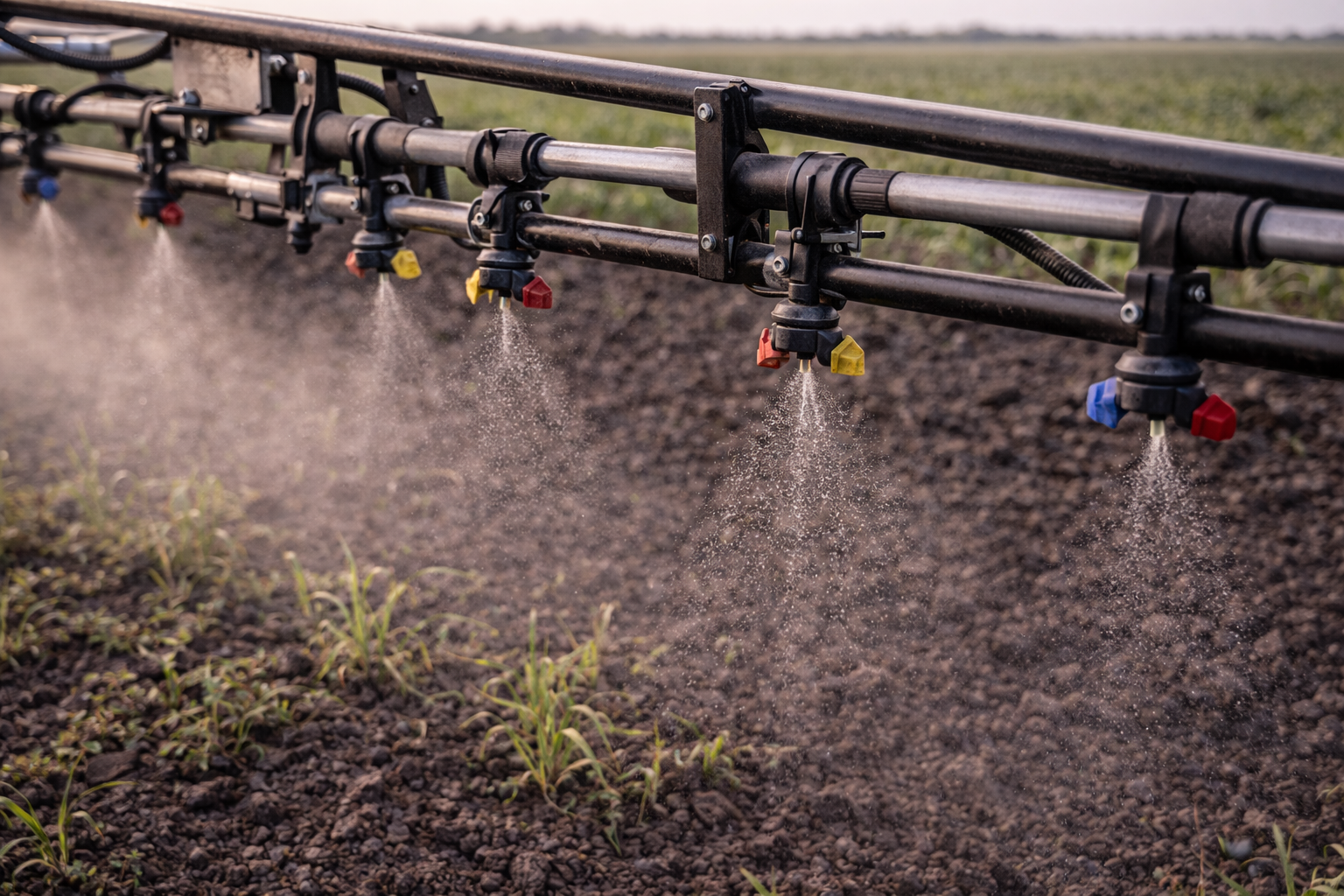
We check weather conditions before every job and at the end of every tank. Wind needs to be steady between 3 and 15 km/h. Delta T between 2 and 8. No inversion conditions — we check the WAND spray hazard system for real-time data across North West NSW. We use air-induction nozzles for applications near sensitive crops to produce coarser droplets that resist off-target movement, and we keep boom height and travel speed within the right parameters.
We also know who's next door before we start. In the Gwydir Valley, where cotton, chickpeas, and grain sit side by side, that communication is non-negotiable.
-
Wind steady between 3 and 15 km/h, Delta T between 2 and 8, no temperature inversion present, and temperature within the range specified on the product label. For 2,4-D applications near cotton country, we apply additional caution around droplet size, travel speed, and boom height as required by the APVMA label.
If conditions aren't right when we arrive, we wait or reschedule. It's not worth the risk to the job, to neighbouring crops, or to our licence.
-
We follow the label, keep accurate records, and call the neighbour before they call us. If something goes wrong, we notify the landholder immediately, pull our spray records, and contact our insurer. Most situations in the Gwydir Valley are resolved quickly when handled honestly and directly.
If you're a neighbouring farmer and suspect drift has hit your crop, photograph the damage with date stamps, collect plant samples, and contact the EPA Environment Line on 131 555.
Getting Started
-
You supply the chemical and we supply everything else — the rig, the operators, and all the compliance documentation. That's standard practice for contract spraying in North West NSW. If you're unsure what product to use or what rate to apply, your agronomist is the right call for product selection — our job is to apply it correctly once you've made that decision.
-
Call Warren directly on 0488 175 275 or email warren@gwydircropcare.com.au. Have ready: the property location and approximate area to be sprayed, the product you want applied, and any timing requirements around planting dates or growth stages. We'll confirm availability and work out a schedule from there.