Why Spray Timing Matters More Than Most NSW Farmers Think
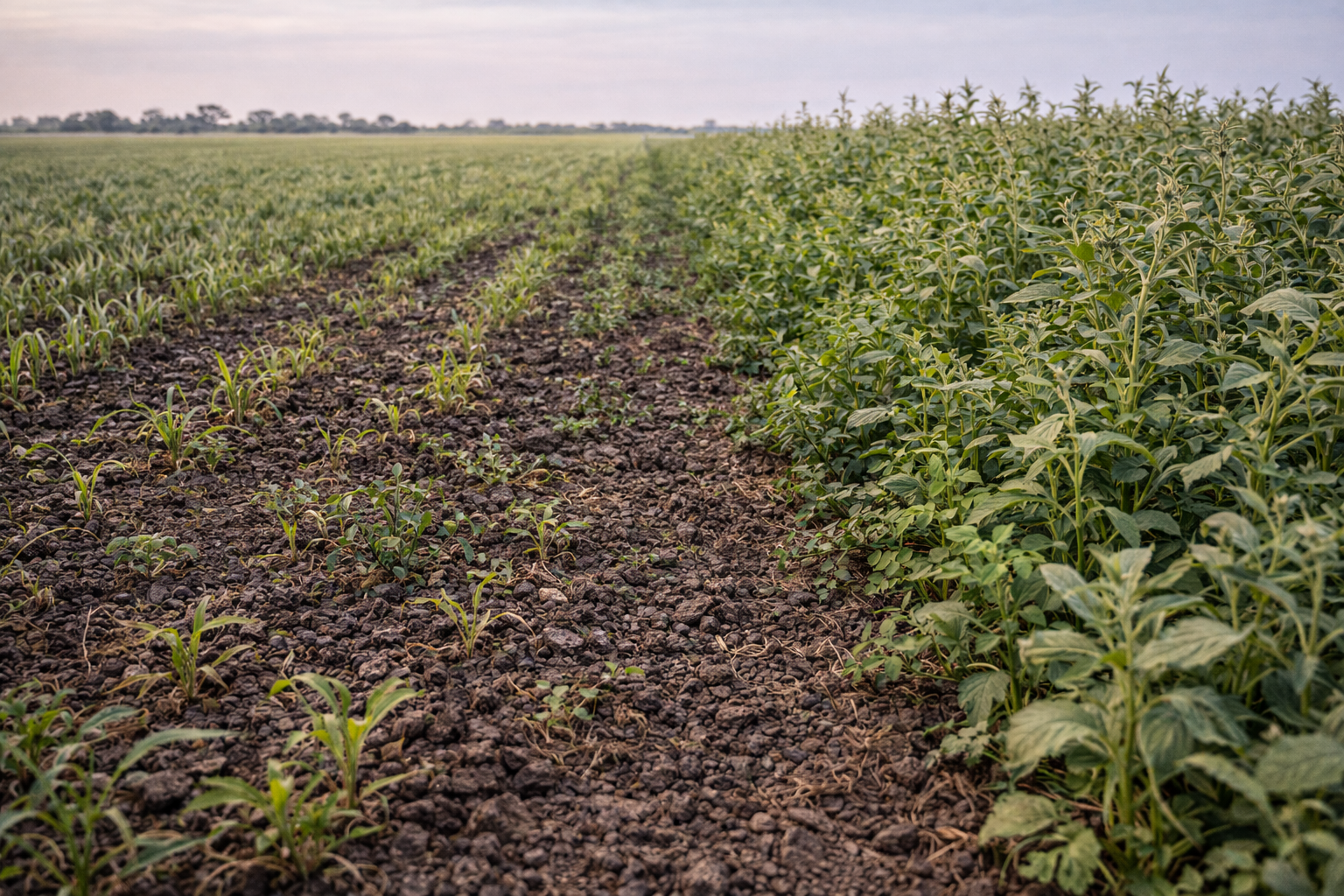
Weeds are patient. They don't care that it rained all week, that the contractor was booked out, or that Delta T was marginal for three days running. They just keep growing, pulling the same water and nitrogen your crop needs, and quietly banking seed that'll cost you more to deal with next season than they did this one.
In North West NSW, where paddock sizes are large and margins don't leave much room, a spray job that goes on two weeks late doesn't just clip this year's yield. The effects follow you into the next rotation. Here's what the numbers actually look like.
Weed Competition and Yield Loss
The window that matters most for weed control is the first few weeks after crop emergence. Weeds that establish alongside the crop, or just before it, are competing directly for stored soil moisture and nitrogen from day one. Research on canola found that delaying weed removal until the 6 to 7 leaf stage cut yields by around 20% compared to getting on early. Wheat and chickpeas show similar patterns.
To put that in local terms: on a chickpea crop at 2 t/ha, a 10% yield penalty is a real per-hectare number. Scale it across a Moree district program and the cost of waiting looks very different from the cost of the spray job. Getting the timing right is one of the things our broadacre spraying clients consistently prioritise.
The Seedbank Compounds Every Season
A single annual ryegrass plant produces up to 50,000 seeds. Fleabane and sowthistle are in the same range. Those seeds go into the soil and stay viable for years, so every weed that sets seed in your paddock this season is building next season's problem, and the one after.
GRDC-supported research puts fallow weed control expenditure across Australia's grains regions at around $487 million per year, yet weeds in fallows still cost over $430 million in lost productivity on top of that. The gap between what's spent and what's still lost comes from spray misses, jobs that went on too late, and escapes that fed the seedbank. You can read WeedSmart's full breakdown of weed costs in the grains industry if you want to dig into the numbers by region and crop type.
There's also a direct line from seedbank pressure to herbicide resistance. Larger weed populations mean more plants exposed to your chemistry, which accelerates selection for tolerant individuals. We cover that connection in detail in our article on resistance management for northern NSW farms.
Pre-Emergent Timing on Black Soils
Pre-emergent herbicides have zero activity on weeds that have already broken the surface. That's not a technicality -- it's a hard limitation of how the chemistry works. The product has to be in the ground before germination, and it needs rainfall or irrigation to move into the weed germination zone.
On the black soil plains north of Moree, a decent summer rain can trigger a fast, dense flush within days. Miss the application window by even a few days in those conditions and you're back to managing emerged weeds with post-emergent products that are more expensive, less reliable on larger plants, and carry more resistance risk over time.
Pre-emergent timing is the one part of the spray program without a second chance. Once that germination window opens and you've missed it, the cost gets paid across the rest of the season.
💡 Knowing when to move and having the rig ready to go the moment conditions allow is the difference between a pre-emergent that works and one that arrives too late to matter. See our article on best spray timing for how weather windows shape the decision across different crops.
Small Weeds Cost Less to Control
The product cost difference between spraying a fallow at 2 to 3 leaf stage versus 6 to 8 leaf stage is real. Smaller weeds need less product per hectare on most herbicide labels, they're actively growing so uptake is better, and they haven't produced seed yet. Accurate application rates at the right time matter too -- that's worth checking your sprayer calibration is dialled in before the window opens, not after.
Across hundreds of hectares of fallow in the Gwydir Valley, the chemical savings between a timely job and a late one adds up to something meaningful on its own. Add the seedbank and resistance benefits on top and the case for early intervention is straightforward.
Working Around the Gwydir's Spray Windows
North West NSW weather doesn't schedule itself around cropping programs. The black soils close up fast after rain. Delta T blows out by mid-morning in summer, and inversion conditions can push back the start of the day further than you'd like. Waiting for the perfect window sometimes means waiting for a week.
The farms around Moree and Pallamallawa that manage weed pressure well are generally the ones treating spray windows as fixed production deadlines. They've got the contractor arranged before the rain falls, not after. Understanding the weather conditions that govern a safe spray job is part of that planning, not an afterthought.
💡 Having a spray contractor on-call and ready to move when conditions allow is worth considerably more than the same contractor booked a week after things settle down. The paddock that gets treated on time costs less across the season than the one that waited.
The ROI of Getting Your Spray Program Right
Here's a version of the calculation most growers work through at some point. On wheat yielding 3 t/ha, protecting 0.2 t/ha of yield by spraying on time rather than two weeks late justifies a meaningful contractor cost on its own, before you factor in the seedbank or resistance picture.
GRDC research puts the overall weed cost to Australian grain growers at roughly $140 per hectare per year in combined expenditure and production losses. Farms with consistent, well-timed weed management programs reliably sit below that figure. The discipline of the spray program, and the calibration and equipment that support it, is one of the clearest differences between those outcomes.
If you want to work through the full timing picture across crops and seasons, our crop spraying guide for North West NSW covers the detail. And if you want to make sure your equipment's actually delivering the rate you think it is when the window opens, sprayer calibration is the place to start.
Gwydir Crop Care is based in Moree and services farms across the Gwydir Valley and North West NSW within 100 km. Warren and the team are ChemCert-accredited, fully insured, and schedule around your season, whether that means early starts, late finishes, or getting on the phone when rain is forecast.
Call Warren: 0488 175 275 | warren@gwydircropcare.com.au | gwydircropcare.com.au