Drone Spraying vs Optical Spot Spraying: What's Worth It on Broadacre Country
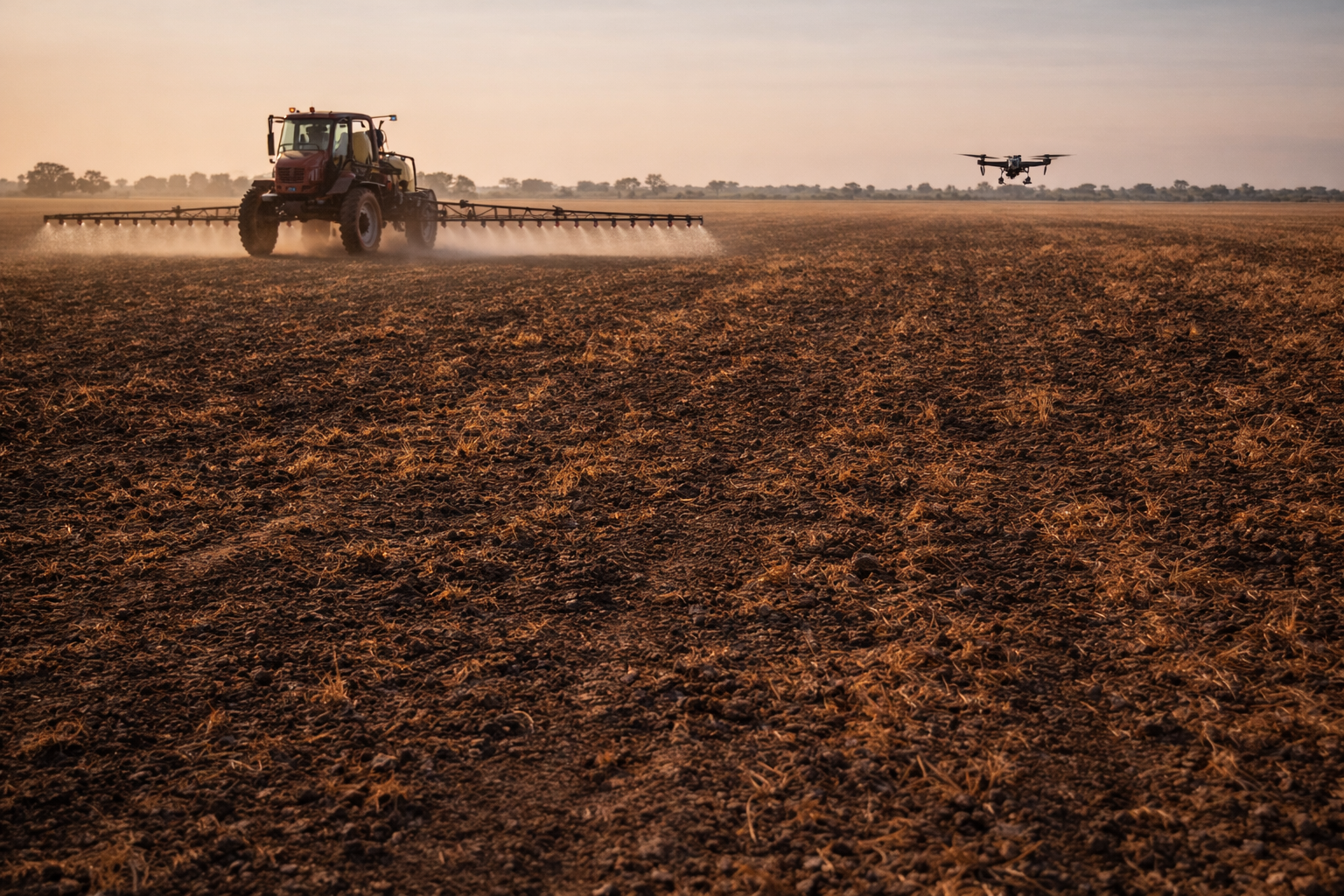
Agricultural drones get a lot of attention. Optical spot spraying gets less, but in the northern grains region it's been delivering real chemical savings for over 20 years. Understanding what each technology actually does, and where ground rigs still win, is one of the more useful precision ag decisions a North West NSW farmer can make right now.
How Optical Spot Spraying Works
Fallow spot spraying with optical sensors has been part of northern NSW farming since around 2002, when the first Trimble WeedSeeker units arrived at a property at Spring Hill in northern NSW. The concept is simple. Sensors detect the chlorophyll signature of green weeds against bare soil or stubble and only open the nozzle when a weed passes underneath.
The Trimble WeedSeeker 2 is the current-generation system. It auto-calibrates for changing light, soil colour and stubble backgrounds without the operator needing to stop. It logs every weed sprayed, which builds a paddock map of weed pressure over successive seasons, and according to Trimble it can reduce chemical use by up to 90% compared to blanket application. In practice, 50 to 80% savings in lighter weed situations are common across the Gwydir region.
💡 Fallow spot spraying is also a genuine resistance management tool. Less total chemistry applied per hectare means less selection pressure on weed populations per season. Our article on herbicide resistance covers that connection.
Green-on-Green: What's Coming
Traditional optical spot spraying works green-on-brown. It picks up any green plant against bare or stubble backgrounds, which limits it to fallows and headlands. Green-on-green technology, using AI cameras to distinguish crop plants from weeds by shape and architecture, opens up the possibility of targeted in-crop spraying without damaging the crop.
Green-on-green systems are moving out of research and into commercial platforms, but they're more complex, more expensive and still being refined for Australian broadacre conditions at scale. For most North West NSW operations right now, proven green-on-brown fallow spot spraying delivers the strongest return.
Drone Spraying: Genuine Uses and Real Limits
Agricultural drones attract serious interest, and there are situations where they make sense. Small or irregular paddocks that are hard to access with a ground rig. Wet or boggy country where a sprayer would cause compaction damage. Specific weed patches or problem areas on otherwise clean country.
For the large broadacre paddocks that define the Moree Plains farming system, drones currently can't match a ground rig on capacity. A modern self-propelled sprayer covers 300 to 400 hectares per day in the right conditions. Most agricultural drones cover a fraction of that per hour, with frequent stops for battery swaps and tank refills.
Drone Regulations in NSW
Commercial drone spraying in NSW requires CASA certification for the operator, and the product being applied must be registered for aerial application or an APVMA permit obtained. Many products registered for ground application are not registered for aerial use. That gap limits chemical options and creates real compliance complexity for broadacre drone spray programs. Always confirm product registrations before planning a drone application.
Understanding what's required before you spray, whether that's ground or air, sits squarely in NSW spray regulations. Our article on pesticide laws and label requirements covers the licensing and record keeping side of things in full.
Why Ground Rigs Still Win at Scale
For broadacre operations across the Gwydir Valley and Moree Plains, a modern self-propelled sprayer equipped with Trimble WeedSeeker 2 technology is still the most cost-effective precision spraying option available. Ground rigs carry larger tanks, cover more area per hour, and operate at the speeds needed to make fallow spraying economically viable across large areas.
Precision ag technology is moving fast. Drone capacity, AI weed recognition and autonomous ground sprayers are all developing quickly. But for commercial cropping in North West NSW today, the strongest investment in precision spraying is getting the most out of proven technology. The ROI case for that is covered in our article on spray timing and yield outcomes.
Gwydir Crop Care is based in Moree and services farms across the Gwydir Valley and North West NSW within 100 km. Warren and the team are ChemCert-accredited, fully insured, and schedule around your season, whether that means early starts, late finishes, or getting on the phone when rain is forecast.
Call Warren: 0488 175 275 | warren@gwydircropcare.com.au | gwydircropcare.com.au